
Uncovering the Best and Worst Months for Online Sales
Updated on September 17, 2026
Table of Contents
ToggleSome months you can barely pack orders fast enough. Then it goes quiet, and you’re refreshing the dashboard wondering if the tracker broke. Every online store lives inside that rhythm. The good news: the best and worst months for online sales follow a pattern steady enough to plan against, and once you can see it, a dead week in July stops feeling like a crisis and starts looking like time to prep for November. The hard part is operational, storing, picking, and shipping through swings that big, and that’s the piece an ecommerce fulfillment partner takes off your plate.
The Best and Worst Months for Online Sales, Explained Simply
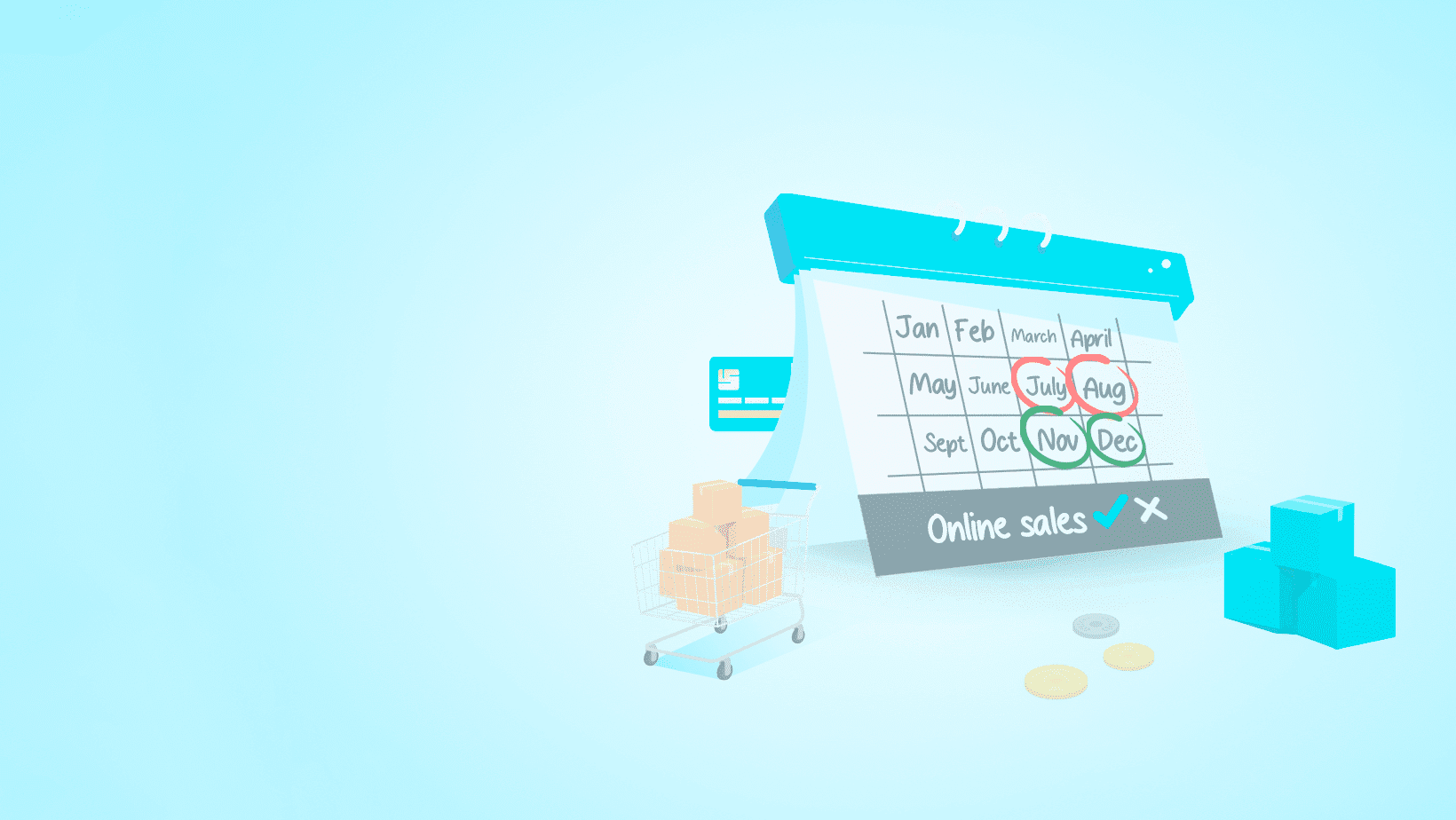
Here’s the short version. The best and worst months for online sales land in roughly the same place for almost every store. Q4 is the high point, November and December, with Black Friday, Cyber Monday, and a solid month of gift buying behind them. For a lot of retailers that stretch alone brings in a quarter of the year or more. Everything else on the calendar sort of bends toward it. When you reorder, when you pull in seasonal help, when you run your biggest sale, most of that really comes down to how close you are to the Q4 spike.
The dips are just as easy to call. January and February drag while people pay off holiday bills. Then summer arrives and July and August pull everyone outside, away from their screens. Two troughs, same time every year. And that’s really the whole point: a slow stretch you saw coming is just a season. One you didn’t is a fire drill.
Why Online Shopping Demand Swings So Hard Between Seasons?
The swings track real life more than anything else. Winter holidays give people a reason to buy and a hard deadline to do it by, and every promotion stacked around them piles on urgency. Take that scaffolding away and spending just drifts back to normal. Weather does a lot of the rest. Summer sends attention to trips and backyards, so sessions run shorter and carts sit abandoned. And the new year shows up with a hangover, the credit-card bill landing right as the holiday glow wears off.
Your category bends the curve too. Fitness gear and storage bins fly off the shelf in resolution season. Apparel builds through fall. Anything giftable lives or dies in December. Read demand as a mix of calendar, weather, and wallet and the swings behind the best and worst months for online sales stop feeling mysterious. They start looking like something you can get ahead of.
Reading the Best and Worst Months for Online Sales Calendar
The easiest way to keep the best and worst months for online sales straight is a plain month-by-month map. The table below buckets the year into peak, steady, and slow, and names what’s driving each one, so you can line stock and campaigns up against it.
|
Month |
Typical demand |
What drives it |
|
January |
Slow |
Post-holiday payback; fitness and organization categories are the exception |
|
February |
Slowest |
Deepest trough of the year; spending recovers slowly |
|
March–April |
Steady |
Spring reset; tax refunds add spending power |
|
May–June |
Steady, rising |
Mother’s Day, graduations, and early-summer buying |
|
July |
Slow |
Summer slump begins; attention shifts outdoors |
|
August |
Slow |
Slump continues; back-to-school builds late in the month |
|
September |
Rising |
Back-to-school and the fall reset in full swing |
|
October |
Rising fast |
Pre-holiday warm-up; early Black Friday deals appear |
|
November |
Peak |
Black Friday and Cyber Monday; the year’s high point |
|
December |
Peak |
Gift-buying rush right up to shipping cutoffs |
A couple of numbers make the swing concrete. The highest online sales of the year consistently land in November and December, with the Black Friday and Cyber Monday weekend setting new records and U.S. shoppers dropping well over $240 billion online in a single recent holiday season. Widen the lens to the full year and the fourth quarter still makes up roughly a quarter of annual retail sales, closer to a third if what you sell is toys, jewelry, or electronics.
Take those as a rough guide, not a promise. Your own mix can move the exact peaks by a few weeks either way. But the distance between your best month and your worst is almost never small, and that gap is the reason the calendar is worth planning around instead of winging.
The Summer Slump: What Really Happens in July and August
Summer is the dip people misjudge most. School lets out, the weather turns, and the budget suddenly goes to trips and cookouts instead of packages. July and August end up the quietest weeks of the year outside the January lull. Conversion softens, order values slide, and every click you pay for costs a little more to turn into a sale, which makes it one of the two clear troughs on any best and worst months for online sales chart.
Writing those weeks off as dead time is the real miss. Slow is prep time. It’s the calmest runway you’ll get all year to fix product data, test a new checkout, shoot next season’s photos, and lock in carrier rates before volume climbs back. Do that, and the quiet stretch quietly builds the thing that carries you through the loud one.
The Post-Holiday Lull and How to Use a Slow January Well
January and February are the other soft patch, and they land right when your team is running on fumes from Q4. Shoppers are tapped out. December returns come flooding back. And set against the holiday high, the quiet feels even quieter than it is. On the best and worst months for online sales calendar, this is the deepest trough of the lot.
It’s also your window to look inward. Clear the returns fast, because a smooth returns experience is often what turns a one-time gift recipient into a repeat buyer. Square up the inventory Q4 scrambled, write down the dead stock, and go through what actually sold so your next order is smarter. The stores that come out of winter in the best shape are the ones that used the lull instead of just gritting through it.
Planning Around the Best and Worst Months for Online Sales
Knowing the pattern only helps if it changes what you buy and how you ship, and planning around the best and worst months for online sales is mostly an inventory-and-operations job. The basic move is simple enough: stock up ahead of Q4, run lean through the slow months so cash isn’t stuck on a shelf, and hold enough safety stock on your best sellers that a surprise run doesn’t turn into a stockout.
That balancing act is what good inventory control is really about, and it leans on matching demand forecasts to supply plans instead of ordering on a hunch. Then there’s fulfillment, the other half of it. Your operation has to stretch for a November running way over baseline, without leaving you paying for that same capacity in a dead February.
Stretching like that is exactly what a 3PL logistics partner exists for: space and labor that scale up for the rush and back down for the lull, plus a carrier network that holds your delivery promises when orders spike. The same playbook that gets you through the holiday peak season keeps the slow months from quietly draining cash.
Marketing Moves That Keep the Slow Months From Going Quiet
A slow month is really a demand problem, and marketing is how you fill it back up. Promotions, flash sales, a well-built bundle, they pull forward purchases that might never have happened, and they bring in deal-hunters who sometimes stick around long after the discount’s gone. The idea is to map your offers to the dips in the best and worst months for online sales ahead of time, not scramble once the numbers have already dropped.
Between sales, staying visible is what keeps you from vanishing. Steady email and a live social feed help keep you in mind during the quiet weeks. So does content that answers the questions buyers actually type. The calm weeks are also a good time to move surplus inventory and grow the list you’ll sell to in Q4. It is also worth watching how people search. More people now start with an AI assistant or a chat box. That puts a real premium on clear, well-structured answers on your own site.
How to Measure Whether Your Seasonal Playbook Actually Worked
None of this means much if you can’t tell whether it worked. So set a baseline first. Write down what an average month looks like, revenue, conversion, average order value, return on ad spend, before you touch anything, then measure each season against that rather than a gut feeling. Lean hardest on year over year: this November against last November tells you far more than this November against a sleepy July.
Read the best and worst months for online sales that way and a vague sense of good and bad stretches turns into numbers you can act on. Keep an eye on the operational side too, order accuracy, on-time delivery, how fast stock actually clears, because a marketing win that buries your warehouse in late shipments and angry emails isn’t much of a win. Measure straight, change one thing at a time, and the playbook gets a little sharper each year.
| Work with Phase V.
Peaks and troughs are a lot easier to ride when your warehouse moves with them. Phase V handles the storage, the pick-and-pack, and the carrier network, scaling up when you’re slammed and staying lean when you’re not, so the best and worst months for online sales both end up working for you. Get in touch with our team and build an operation that holds up all year, not just in Q4. |


